The Michael Vick Project
February 3, 2010
Black Entertainment Television is currently airing a documentary series/reality show featuring Michael Vick and his family. Michael Vick was at one time, the highest paid player in the NFL. Vick was arrested in 2005 and served two years in prison on a felony conviction for running a dog fighting ring. Vick, now out of prison, has been signed to play NFL football again for the Philadelphia Eagles, despite much controversy and derision.
I happened to catch last night’s episode of the Michael Vick Project (I believe there will be six more installments) while I was channel surfing after dinner. What I saw on that show was a good deal of crying, stories of hardship and struggle growing up, and recollections of dog fighting in childhood that included such reflections as “We never knew there was nothing wrong with it” and “We gravitated to it.” During this particular show Vick stated several times in various ways that he had done “cruel and inhumane things to dogs”, but at least in this episode, Vick did not state exactly what those cruel and inhumane things were. In it’s entirety, what I took from this show is that it is an attempt to garner sympathy from the public for Michael Vick and his family so that we all can accept and forgive him for his mistakes and allow him to come back into the public spotlight to resume his career with a clean slate.
I was really curious after the show to find out more about why it was on the air. I cannot recall ever seeing a documentary series about a convicted felon. I have seen plenty of documentary *episodes* on felons, most still in prison, some dead before shows were aired about their lives. It seems to me that there has always been an effort to prevent felons from making money as a result of their criminal acts as well as serious attempts to prevent felons from gaining attention and publicity for their crimes.
I visited the Black Entertainment Television Website and nowhere could I find a justification from those that run BET for the airing of the documentary series. What I did find was a Blog for the series that has probably gotten my ire up more than the documentary itself.
Here is the link for it so that you can check it out for yourself:
http://blogs.bet.com/ontv/primetimeplayback/2009/10/231/?cp=6#comments
I believe the majority of those comments were very critical of BET for airing the documentary, many said they were ashamed of BET, and some said they were asking their cable companies to remove the channel from their listings. Time and again, BET was urged through those comments to pull the documentary off the air.
However, peppered in with those comments were a lesser number of responses from those who are supporters of Michael Vick. Those comments truly give the reader an insight into why this documentary is on the air despite the protests about it.
Here are some of the common themes of supportive comments contributed to the Michael Vick Project Blog on the BET website:
Haters/Judgers
If you don’t support Michael Vick, you are a hater and a judger. People shouldn’t hate. God is the only one who should judge people.
Good points. I think what we ought to do is abolish all laws as well as law enforcement, the criminal court system, and shut down all the jails and prisons. We’ll just save all the judging and punishments for God to do. He knows what’s best for us and I am certain this would make for a much better world. Why let’s just look at a few countries now who have no rule of law and no functioning government……. Shall we start at Haiti or Somalia perhaps? Hmmm……that’s probably making me some kind of hater though.
The Mistake Argument
Michael Vick made a mistake and has now paid his debt to society and should be allowed to move on with his life. No one knew that dog fighting was wrong until Michael got in trouble for it. Two different sentiments but both are closely tied together. Both thoughts infer a “minimizing” of the illegal behavior. Should we be allowed more leeway when we choose to do illegal things that we are not aware are illegal? Are so many crimes committed because people don’t know what they are doing is illegal………..or does it just not matter? Maybe there are also a lot of people convicted of felonies and serving time in prison because they weren’t aware that robbing, drug peddling, car theft, and murder are wrong? (and also illegal). Maybe people who claim ignorance of the law ought not to be prosecuted? How do you find those kind of things out anyway?
Here’s the big problem with the “No one knew it was wrong” argument:
If dog fighting was *right* and legal, and if Vick was going back to Virginia to check on his Pit Bulls every Tuesday, then why didn’t Michael share that with the media? It was a hobby he enjoyed to do. He and his cohorts wanted to raise the baddest fighting dogs ever in their kennel. They wanted to be the best at dog fighting. If it was an “okay thing”, then why didn’t we ever read an article about it in Sports Illustrated, see a video clip of it during a Monday Night Football Show, or see a Michael Vick special on the Animal Planet Channel? The highest paid NFL player gets plenty of exposure and media opportunities. If this was right and Michael spent so much time on it, why didn’t everybody know about it?? Could it be that Michael knew it was illegal when he was doing it?
The Race Card
The only reason Michael is getting beaten up for this is because he is a black man.
Well if nothing else will shut people up then you always have this argument to throw out there. For those of you who aren’t aware, the Race Card also applies to light skinned black people (a particularly offensive slur is used to describe that group of people).
There were apparently some white people cock-fighting down the road from Vick but nobody heard about them. Well, gee, the media hasn’t ever found that poor, unknown criminals make for great ratings. Rich, high profile law breakers do. Then, of course, Tiger Woods’ name got dragged into the argument because the only reason he’s on the news for his infidelity is because he is black. Apparently these contributors don’t watch the same news that I do, because Mark Sanford and John Edwards have certainly got their share of media attention for their behavior as well as other politicians in the past several years. I am certain that if any white NFL football player had been convicted of running a dog fighting ring that they’d be thrown under the bus too with no regard for their skin color.
Improper Grammar, Spelling, and Usage of the English Language
Another commonality that I must mention among those supporters of Vick on the BET Blog was that those comments were often poorly written. Those who cannot spell and do not display a halfway decent mastery of the English language are also people who’s opinions are ill-educated too. In reading blogs and blog comments poor writing immediately affects my perception of the writer’s intelligence. So I am of the opinion that at least some of the people who are supporters of Michael Vick are supporting him because they are incapable of clearly understanding the issues present in this situation. Those people are typically influenced by the unintelligent opinions of others because they cannot weigh these opinions critically for fact and truth.
Perhaps BET’s air time could better serve people by producing shows that educate the viewers. A very helpful docu-drama might be one that features behaviors that are illegal and that should be avoided. Maybe a show about how people choose their behaviors and should accept responsibility for the consequences of those behaviors. Some grammar, spelling, and writing programs could also be very useful for those who want to work on self-improvement and moving up in the job market.
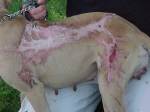
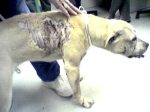
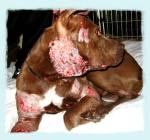
So let me leave you all with a few pictures of what happens when people want to raise the baddest fighting dogs ever. I’ll let you all be the judge.
Dog Food Review: Kibbles n’ Bits
July 9, 2009
Some time ago, maybe 10 years, I remember I was fascinated and enthralled with Kibbles ‘n Bits dog food and even fed it to my dogs for a while. Around that time Kibbles ‘n Bits was featured in Consumer Reports Magazine. Consumer Reports had conducted a taste test of several different brands of grocery store dog foods and Kibbles ‘n Bits Original was the winner of that taste test. The press that Kibbles ‘n Bits received from this Consumer Reports article vaulted Kibbles ‘n Bits to the front of the pack of grocery store dog food brands and helped Kibbles ‘n Bits make its way into the shopping carts of hundreds of thousands more pet owners, myself included. I was drawn to the colorful bag and the moist “Play Doh-looking” kibbles with the great fun shapes and colors. I remember that one flavor of the food smelled like spaghetti to me and I just knew my dogs would LOVE IT! They did and, so much so, that when I would switch to another brand of daily kibble, I often used Kibbles ‘n Bits for training treats. I don’t ever recall looking at the ingredient list on the back of the bag and I never doubted that this food wasn’t completely safe and healthy for my dogs to eat for every meal, every day. Kibbles ‘n Bits made me smile and sometimes giggle when I fed it to my dogs at mealtime. With the knowledge of dog nutrition that I have now, I find myself a little mortified looking back on it. I do, though, have a lot of empathy for those that are drawn to this food product. Del Monte does a great job of appealing to the emotional side of pet owning consumers to influence their buying habits.
Let’s take a closer look at the ingredients for Del Monte Kibbles ‘n Bits Original:
corn, soybean meal, beef and bone meal, ground wheat flour, animal fat (bha used as preservative), corn syrup, wheat middlings, water sufficient for processing, animal digest (source of chicken flavor), propylene glycol, salt, hydrochloric acid, potassium chloride, caramel color, sorbic acid (used as a preservative), sodium carbonate, minerals (ferrous sulfate, zinc oxide, manganous oxide, copper sulfate, calcium iodate, sodium selenite), choline chloride, vitamins (vitamin E supplement, vitamin A supplement, niacin supplement, D-calcium pantothenate, riboflavin supplement, pyridoxine hydrochloride, thiamine mononitrate, vitamin D3 supplement, folic acid, biotin, vitamin B12 supplement), calcium sulfate, titanium dioxide, yellow 5, yellow 6, red 40, BHA (used as a preservative), dl methionine.
Dog Food Ingredients are listed in order of their amount (by weight) in the bag, except for whole meat ingredients, (such as ‘beef’ or ‘chicken’) which are weighed raw before they are cooked and the water /fluid is gone out of them.
The ingredient then, which occurs most in Kibbles ‘n Bits is Corn. The AAFCO definition for this ingredient is “the entire ear of corn ground, without husks, with no greater portion of cob than occurs in the ear corn in its natural state”. This means that the corn *along with the cob* is in the food. While corn is only 54% digestible for dogs, the cob is not digestible, nor does it provide nutritional value. Corn can cause or contribute to problems with allergies, skin problems, and ear infections.
The ingredients *up to* the fat source in a dog food are what make up the majority of what is in the bag of food. All of the ingredients listed *after* the fat ingredient occurs in smaller amounts (Somewhere around 20% of what’s in the bag). So most of what is in the bag is corn, soybean meal, beef and bone meal, and ground wheat flour.
In Kibbles ‘n Bits , there are THREE grain ingredients and only ONE protein ingredient listed before the fat. In a good quality pet food, the meat protein source should be listed as the first ingredient in the bag. Most of what is in this bag of food is grains. Grains are not a natural food source for dogs, and do cause health issues. With a dog’s short digestive tract, most grains can only be partially digested and little nutrition is absorbed from them.
Beef and Bone Meal is the only meat protein source in this food. It can be easily confused with Beef Meal which is a higher quality ingredient that I would expect to be used in a food I might choose to feed. Beef and Bone Meal is a byproduct made from beef parts which are not suitable for human consumption. It can incorporate the entire cow, including the bones, but the quality cuts of meat are always removed. This is an inexpensive, low quality ingredient used to boost the protein percentage. Beef and Bone Meal is less digestible and less usable to a dog than the muscle meat that Beef Meal is made from.
The Crude Analysis of the food states that the Protein content is 19%. This is a pretty low percentage compared to good quality foods. The Crude Analysis does not indicate the percent Digestibility of the Protein and this also should be considered. Low quality protein sources such as Beef and Bone Meal can be as little as 45% digestible. I feed my dogs foods made from high quality protein sources that are 90 to 92 percent digestible and the Crude Analysis of Protein content in the foods that I feed and recommend range between 24 to 42%. The other factor to consider when comparing Crude Protein in Kibbles ‘n Bits to another dry kibble is that you must factor out the moisture content in Kibbles ‘n Bits. A “dry” dog food that has 19% protein, actually contains more protein than Kibbles ‘n Bits because Kibbles ‘n Bits is a semi moist food.
The fat source (Animal Fat) is not a species identified ingredient. When ingredients are not listed according to their species, the animals used can be obtained from any source. There is no control over quality or contamination. Any kind of animal can be included: “4-D animals” (dead, diseased, disabled, or dying prior to slaughter), goats, pigs, horses, rats, misc. roadkill, animals euthanized at shelters, restaurant and supermarket refuse and so on. On down the ingredient list is Animal Digest. It is a cooked down broth used for flavoring, and made of unspecified parts of unspecified animals. The same facts about ingredient sources apply to both Animal Fat and Animal Digest.
After the fat ingredient, the next ingredient is corn syrup, which is a sweetener. Sweeteners have NO place in dog food. They are added to improve the taste of a poor quality food. Dogs become addicted to the sweeteners, making it difficult to switch the dog to a healthier food that does not contain sweeteners. Many substandard foods contain sweeteners, but I rarely see them listed as high on the ingredient list as they are in Kibbles ‘n Bits. Continuous intake of sweeteners can promote hypoglycemia, obesity, nervousness, cataracts, tooth decay, arthritis and allergies. Sweeteners should not be present in a dog food that will be fed every meal every day.
Propylene glycol is an ingredient used in antifreeze solutions, in hydraulic fluids, and as a solvent. In dog food, propylene glycol is added to keep moist foods from drying out. Propylene glycol may be toxic if it is consumed in large amounts, and should definitely not be an ingredient in a food an animal will eat daily for weeks, months or even years of its life. In countries of the European Union, propylene glycol is not cleared as a general-purpose food grade product or direct food additive.
Beyond most of the sprayed-on vitamin and mineral supplements added to make the food “complete”, you will see several types of food coloring. Coloring is only necessary to make the food appealing to humans. With the potential risks of tumors, cancers, and allergic reactions, even if those are slight risks, I’d rather feed a non-colored meal to my pets.
I will have to say that I was surprised to see BHA on this ingredient list. It is used to preserve the food and was at one time widely used in pet foods as a preservative. Many dog foods now are preserved with some form of Vitamin C, even if they are otherwise a cheap, substandard food. Most consumers, if they look at an ingredient list, have heard enough about BHA to set that product back on the shelf and choose another. BHA is banned from human use in many countries but still permitted in the U.S. BHA is a possible human carcinogen, and is apparently carcinogenic in animal experiments. BHA is definitely not a suitable ingredient for feeding every meal, every day, for months or years.
Kibbles ‘n Bits dog food is marketed to appeal to the human consumer. It is a grain filled food containing nearly no * real meat*, and is formulated with sugar, salt, and sprayed on animal digest gravy to make it appeal to dogs when it would probably not attract most dogs to eat it otherwise. In addition, the product contains colorings, propylene glycol, and BHA, three types of ingredients that I believe are not safe for continuous consumption. The product is, to me, clearly sub-standard for maintaining the health of a dog. It is, however a great way for Del Monte to disposed of the waste products of their human food factories. With as much grains and sweeteners this food contains, it should be re-named “Cupcakes ‘n Bones”.
Our Floyd County Neighbors Violate Property Rights
January 21, 2009
In 1997, my husband and I were able to purchase 12 acres and a home here in Floyd County. Our dream was to run a small boarding kennel and a hobby farm. What we failed to realize when we bought our dream, was that our neighbors had other plans in mind. It appears to us that the purpose of buying acreage in Floyd County is not to live a peaceful and tranquil life with our family and our beloved pets, but to provide a playground and killing fields for all of the free roaming dogs owned by our neighbors.
In the past 12 years we have lost 23 of our pets to attacks by roaming neighborhood dogs. While I was going to eventually get around to writing a blog post about owning dogs responsibly, I had hoped that I would only be writing to tell you that we’d lost 22 pets. Tragically, the slaughter total rose by one more yesterday morning, and I cannot find any other way to move forward without writing this down.
It all started about 10 years ago with ducks. When the ducks had grown enough to be taken down to our pond, Jeff was so pleased about it. The ducks enjoyed the pond for less than 36 hours before they were all killed and maimed beyond repair by a neighbor’s dog.
So then we tried goats. There were three separate attacks. The first two, only a few goats killed and injured. The last attack was much worse. We had nine goats, most were pregnant. By the time my stepdaughter saw the attack and called Jeff out to help, seven of the nine goats were dead or mortally wounded. That day we had to hire a back hoe to dig a hole big enough to bury them all.
So, we shored up the goat barn with wire to try to make it dog proof and decided we’d try chickens. Only a few at first. Within a week, those few were killed.
That was about 5 years ago. After that, we decided we’d have nothing smaller at the farm than a pony. We still had our dogs and 4 house cats.
Not long after the chickens were killed, I was at my arena teaching a dog training lesson to a client of mine. That morning, both of us watched as two neighborhood dogs ran down and killed a young deer in the woods behind my pasture. My client, a city dweller, was horrified.
Now you are probably thinking that all these dogs must be Pit Bulls or Rottweillers or some other “mean” breed of dog. I will tell you that, while we had one Pit Bull and one Rottweiller attack our pets, the rest of the attacks have been perpetrated by Labrador Retrievers, Lab Mixes, Boxer Mixes, and Beagle Mixes.
All of these dogs, however, have one thing in common. They are owned by people who have absolutely no respect for the property and the property rights of their neighbors. These people, who would throw a fit if I parked my car in their yard or threw my garbage on their steps, see absolutley nothing wrong with turing their dogs loose to roam the neighborhood and maim and kill other people’s property. I spoke a few years ago to a neighbor down the street with a Black Lab. She showed me the scars on her dog’s head where another neighbor had shot the dog for chasing cattle on his property. This woman told me that dogs should be allowed to roam free because that is the way Mother Nature intended for them to live and that is what makes her dog happiest. I beg you to explain that logic to me.
Three years ago, after a neighbor of ours experienced an attack on his goats, Jeff contacted our Councilman and Animal Control. They agreed to make and post signs at both ends of Prater Road which stated the Ordinance regarding the prohibition against roaming animals along with the fine for the ordinance violation. They refused to send letters of notification out to residents of the area which was another request that we made. The signs have done little to encourage adherence to the law.
Last year our next door neighbor aquired three dogs. Two Boxer mixes and another Toy mix. The toy is an indoor dog, but the Boxer mixes have been left outdoors and unconfined. While these dogs stayed at home pretty well at first. The roaming began a few months ago. They have dug holes under our fence to get into our pasture to worry our horses. At any time of day you can drive down Prater Road and you will see them up and down the street and lounging in whatever yard they prefer for the moment. That is, when they are not in our pasture worrying our horses. The toy dog comes in the pasture when it is let outdoors as well and stands two feet from my horse’s face and barks and lunges without stopping. While the dog could not do any kind of damage to the horse, the dog could be instantly killed by a paw or kick from one of my horses. These neighbors do not seem to care. We have a bit of history with them. They were the owners of the Rottweiller who, along with a Pit Bull, killed our herd of goats. My husband caught them in the act and shot them down inside the goat pen. When our neighbor came to get his dead dog, he said he didn’t have any money to pay us for the damages but he would check with his homeowner’s insurance. That is the last we have seen or heard from him. Now it is his dogs who have killed again.
These killings are not the fault of the dogs. Dogs, when left to their own devices, will follow their instincts. A dog with a natural prey drive who is allowed to roam freely, especially if the dog is with one or more other dogs, will quickly learn the sport of killing animals. It is gratifying for them and it is fun for them.
In my dog training classes, I spend time educating students about responsible dog ownership. I encourage them to visit Animal Control and pick up a copy of their local ordinances so that they can be familiar with them. I tell my students the story of my losses here at home and I stress to them the importance of safely confining their dogs so that their dogs do not become nuisances or killers. For the most part, I find that I am preaching to the choir when I do this. It is the people who do want to be responsible dog owners who pay tuition to attend my classes in the first place. The population of people who need to hear my message are those who would never consider stepping inside my facility or using my services. They are people with a different view of animals than what I and my clients share.
I will never understand the reason for getting dogs so that they can be turned loose to roam. For the most part, these people blame their dogs when trouble happens. “He was a stupid dog.” “He was a mean dog.” “He was a stubborn dog.” I hear this blaming when people recount stories of dogs they’ve owned who have ended up shot, run over by cars, become pregnant, been attacked by other dogs, attacks animals or people, gets poisoned, and/or dies of pancreatitis or intestinal blockage from eating garbage and roadkill. How is this possibly the dog’s fault?
A dog does what he is trained to do. Believe me, that if you’re not spending the time training your dog to do what you want him to do, he’s training himself to do the things he prefers to do. Domestic dogs are bred to do work for humans. If you do not give your dog meaningful work and supervision, he will find his own work and it will doubtfully be productive or positive work.
Yesterday we lost a member of our family. Alan Jackson was a rare Chocolate Point Siamese Cat. We adopted him 14 years ago after he was found starving and eating dog food out of someone’s garage. My stepdaughter was 4 years old when we got him and she named him after her favorite country music singer. Jeff very quickly attached to Alan and they have been the very best of friends for the last 14 years. Jeff and I came up with a dozen nicknames for Alan over the years. He is known to most of our friends as “Titty Boy”. He was a loud and demanding Siamese, always willing to tell you exactly what he wanted and exactly what he thought about things. He loved food and his life revolved around the happiness of his belly. At mealtime, Alan always took his spot, *on the table* at the left of Jeff’s plate, politely waiting for a handout. Jeff’s time here at home was in nearly constant companionship with Alan. They ate together, slept together, and watched tv together. Alan enjoyed going outside and watching Jeff do chores or work on projects. If Jeff was outdoors, Alan was never very far away from him. Anytime we had company, Alan was the first of our pets that Jeff wanted our guests to meet. Jeff could talk on and on about Alan’s adventures (both real and fabricated) and Alan’s personality and his likes and dislikes. Those two were like peas in a pod. Jeff would chase me around the house with Alan in his arms holding out one of Alan’s back paws and saying “Kiss the Foot. Kiss the Foot. It will make you lucky.” He loved to aggravate me about how Alan didn’t like the dogs and how Alan wanted a “D.F.E” (Dog Free Environment). After Jeff would shower, Alan would get in and lick the water, Jeff said ” Because it tastes like Daddy’s sugar.”
The neighbor’s dogs killed Alan Jackson. I found him yesterday morning in the empty lot across the street from our home. He was lying in the leaves frozen. The agony in his dead face haunts me.
We buried Alan yesterday afternoon, next to Jaymie, Carmen, and Logan. The graves here are becoming too numerous to count.
Cyndy Douan, MHDL CDT
Kingston Kennels, LLC
Georgia Dog Gym, LLC
Trey- One Month Mark
January 20, 2009
Trey, the Border Collie that I am fostering has now been with us for one month. The change in him has been remarkable. He is responding to his grain free high protein diet very well. He looks more like a healthy Border Collie with the weight he’s gained. His skin is coming around and he’s no longer snowing with dandruff. He looks beautiful.
I have been in and out of town a good bit over the past few weeks so for that time I took him back over to stay at the dog gym. While there he’s met and interacted with all of the staff very positively. He has also met a few people for the first time and has been more eager and less withdrawn with them.
Trey continues with the annoying habit of marking indoors which we are working to curtail. I am just not very certain about the progress we can make with this.
Considering Trey’s history of free roaming and not having to be confined, I was afraid that, after a time I would start to see Trey become anxious and upset about being kenneled. Surprisingly, Trey is just as happy to be indoors and be in his kennel as he was when he first arrived. Perhaps it is a security for him that he needs.
I have spoken with someone I know who keeps sheep and he is willing for me to bring Trey over and try him out with the stock. Now it will just be a matter of trying to find the time to get together to do that. I will video that and post it here when we do it.
Trey enjoys the company of my female Border Collie puppy, June. I still have not allowed him to be around other dogs because his body language makes it very clear to me that he is anxous and not comfortable being near some other dogs. He does seem fascinated with the little dog playgroups. He watches them in the opposite play yard when he is turned out and runs back and forth along the fence……….possibly with a desire to herd them.
I let Trey meet the gym cat Wynona today. He noticed her from a distance and perked up, but when we got within a few feet, he tried to pretend she didn’t exist. He wouldn’t approach her or look at her at all. It may at least be a positive sign that he respects cats and could live with them peacefully.
Trey crawls up into my lap now when I sit on the floor. He will put his paws up on my shoulders and will sniff my breath. He is overjoyed to see me and only wants to be near me and be stroked and petted. Such a sweet, sweet soul.
Video of Trey one day after he arrived.
January 1, 2009
This is video taken on December 19, 2008. Trey is exremely withdrawn and trying to hide. He does not know how to be on a leash and he does not want to go outside of his run.
Video of Trey 10 Days After He Arrived Here
January 1, 2009
This video shows about the best day we’ve had in the last 10 days. It was shot on 12/28/08. Trey is barking and excited to see me (and sneezing and snorting too!). He is following me around a good bit more and returning to the security of his run only a couple of times. He sits in anticipation of treats. He is also asking for more petting and not so quick to leave me after I pet him. I considered it a huge breakthrough when Trey put his paws up on me to get the treat. That was a big move toward confidence and trust.
Trey barks at the other dogs when I let them out and again when I let them in. He is barking at the dogs. I see a lot of this behavior with dog friendly dogs at the kennel, but I also see it with dogs who are not so good with other dogs. I can see that some of the dogs feel uncomfortable with Trey’s attitude and do not want to go near his run. Some of them show their teeth when he approaches their runs. I am getting a feeling that Trey is not going to be one to get along with other dogs. I don’t think he’s had much socialization with them. I sense that his fear of outdoors has to do with the other dogs who are turned out in the adjacent kennel yard while I have him out exercising. Today was the first day that Trey went outside without me taking him with the leash. He followed me to the opposite side of the yard where the trees are, but as soon as he saw the dogs running around in the other yard, he turned back and made a bee line for the back door to try to get back into the kennel. He will not go near the chain link fence that separates the two yards.
Beginning of a New Year
December 29, 2008
I woke up this morning wondering just why it is that I’ve felt this undercurrent of gloom and sadness over the holidays. On the surface, I feel just fine. Peachy, as a matter of fact. I’ve enjoyed the holidays and I am excited about the prospects of the coming year.
So while I took my morning coffee and headed on down to the kennel to give the dogs a run and some breakfast, I decided that maybe it would be a good time to take stock of the year that’s passed so that I could once again remind myself what all I have to be thankful for.
The result of that “taking stock” wasn’t quite what I’d anticipated. It’s really kind of stunned me when I take it all in as a whole, because I guess I never dwelt on any of the parts for very long, at least not long enough to get the sense about it that I have now.
It seems that 2008 brought with it quite a bit more in the negativity department than I really have cared to think about. It was this year that I lost Jaymie, my 14 year old Golden Retriever who was my right hand in my business for most of the years that I have been a pro trainer. I lost a friend, Danny Thomason, and a cousin, Melinda Carter, to suicide. I saw it coming with Danny, and I could not stop it or did not do enough to stop it, or could not have done anything that would have stopped it. Poor Melinda was only 13 years old. I lost Dunny, our 29 year old horse, and Merrylegs, our 30+ year old pony. It is really a tough thing to put an old horse down…..
I lost more than six months of competitive agility training and trialing with Riff after he was seriously injured during a competition. I lost my courage to do frisbee disc with Riff because of the accident and nearly lost my courage to trial him in agility again. My dreams of taking Riff to USDAA Nationals someday, are, I believe, gone as well.
I feel a deep sense of loss over the IACP. Having co-founded the organization and being it’s very first member and having been a Director of IACP for more than 10 years, giving it up and letting it go has been extremely wrenching. Having spent so much of the last decade of my life being a leader in this organization, letting it go meant losing a big part of my life. It was the right decision for so many reasons, and I would not go back and change that. It may be one of the hardest things I’ve ever had to do.
Losing IACP meant losing a lot of other things along with it, including a sense of “place” in the world and many of the connections with people that I had, for many years, enjoyed.
I did lose weight this year! I also lost some hair and the ability to read small print without glasses…….
I had a very curious loss of someone who I thought might have turned out to be a close friend to me. I inadvertently found her puppy at the county animal control and in my attempts to help her by rescuing the puppy and getting it medical attention for an intestinal blockage, I found out that the puppy had been purposely signed over to animal control. I also ended up losing the puppy, who had incredible perfomance potential. I had to re-home the puppy because I could not look at her without torturing myself over the betrayal that both the puppy and I had endured.
Although I’ve looked for the exact quote and cannot find it; as it was told to me, the Dalai Lama says that the greatest human suffering results from our attachments to others. Looking back on 2008, I cannot tell you how true this statement rings for me.
I wonder now if I’m feeling so “peachy” because the Hurricane of 2008 is now over and that there’s hope that 2009 will bring soft breezes, calm waters, and many sunny days. Once again, I survived the storm and managed to ride out the waves, hanging on tight to my little boat, and bailing like crazy to keep from sinking in the water. If nothing else, I am a good survivor. I truly believe it’s what I do the best.
Not all that occurred in 2008 was bad. In fact some of the bad, I can see good in.
My husband tagged me with a new nickname this year: “The Bulldog”. He said something like “no matter what happens, you just won’t lie down, will you?” My response was something like “lying down is something I don’t see as an option”.
There were terrfic amounts of good this year thanks to my Bulldog nature! I have just about the greatest, sweetest little Border Collie puppy in the world. She has been the light of my life this year. My Riff finally won his first high in trial and finally won a Performance Steeplechase. Little Toot won a Performance Steeplechase this year too. I got to take just about the best vacation in Paradise. I have a staff at Georgia Dog Gym who is just absolutely wonderful! (Thank you Missy, Kathy, Lindsey, Beth, Mecca, David, A.J. & Denise!) I paid the last payment on my van this fall and it is now MINE! I met a whole lot of great people this year through the work that I do as a trainer. I enjoyed training a TON of really fun dogs!
I think this year I did more “living in the moment” and “appreciating the gift of the day”. I am able to find my peace and hold on to it in a way that had been very difficult for me. All of these things I am excited to bring into the New Year. So I think that looking back at this year and acknowledging the bad along with the good is maybe the thing that I needed to do today.
So, I’m off to see what the rest of today is all about. The sun is shining and the breeze is soft.
I’m alive, and well.
What is a Relationship?
December 27, 2008
There are times when I feel a special call to help a dog. I have often thought it to be God’s way of showing me just one more aspect of dogs that I need to explore in order to answer some of the questions that I wrestle with. One more clue to help me fit the pieces of the puzzle where they may belong.
So a week ago, Trey arrived. The phonecall is like the same call that I get several times a month. Someone has a stray dog that they can’t keep and can’t find a home for. These folks were looking for a referral for a Border Collie Rescue. Unfortunately, the nearest on of those is more than an hour away. I replied that the only closest alternative would be the county Animal Control, but that if they did not want to do that………….”just drop the dog off here at the gym and I’ll figure something out”. WHOOPS! I said it without even pausing to think. Somehow in my gut, I knew the dog was supposed to come here.
In my training, I emphasize the importance of “relationship”. I push my students to examine the kind of relationship that they have with their dogs. I talk “teamwork” in my agility classes. I evaluate new training students by observing the quality and quantity of “relationship” that they have with their dogs. I work with so many people on improving their relationships with their dogs. I look for moments when I feel dog and handler “connecting” and in my own dogs I work harder on relationship than any particular training issue or training concept. I want the dog to want me and want to be with me, and want to be involved in what I am doing.
There are trainers who debate the relationship issue. Some argue that you must first have a relationship with a dog in order to train it, while others say that, with any dog, your training is where you begin and relationship with the dog will follow after that. While I lean toward the former, I have tried the latter on occasion and have seen where it can work.
I’ve always counted relationship, be it good or bad, to be a part of any of our interactions with dogs.
But I have now encountered a dog who I believe has never experienced any relationship at all, I think, ever, with any human. He’s not feral or wild, as I would expect, and I know he’s been around people. It is just as if he lacks an opinion and lacks a preference when it comes to people.
When Trey came here a week ago, he’d never been leashed, and he could only crawl along the floor and look for anything to hide under or inside. He did not cringe in the back of his kennel and try to warn off anyone who approached him, which is what I expected with a dog who seemed so afraid. Trey just laid down by the gate and would not move or look at me. I could approach and touch and stroke Trey and he would not move away. In another day his tail would wag softly when I approached, but no other change was evident. He accepted my presence without trying to escape, but nothing more.
Trey did not know how to take food from my hand. He would not look expectantly at me for food nor approach me to be stroked. If I tossed food on the floor, he would eat those bits, then wander to a corner and lie down, never expecting that I’d offer another bite. I could guide him toward me with a leash and then stroke him, but after I stopped stroking, he would not ask for more. Trey did not appear to be afraid of me and he will accept whatever I give him, but Trey expects nothing. Nothing at all.
I don’t believe that Trey has ever been abused in the sense that we think of dogs being beaten or kicked. I just don’t get the sense that anybody ever made an effort to have a relationship with this dog…….for good or bad……..
Trey is the perfect picture of a working sheepdog. Black and White, smooth coated, pricked ears, and a blaze. He has funny big feet. Trey is underweight but has terrific muscle tone. He should, as he’s spent at least the last 3 months hanging out at a horse farm, running horses. I wonder if he was ever someone’s farm dog and if perhaps he was simply used for simple chores and then put away in the barn. Maybe that’s my romantic dream anyway.
It’s been a week since Trey got here. He gets excited when I go down to the kennel now. He will take food from me easily now and has learned “sit”. He finds security in his run and when he is unsure of what to do, he will go back to his run. He has never wanted to spend any time outside. I can barely convince him to stay out long enough to potty. Trey will follow me around a little bit inside the kennel, but trots back to his run frequently. Today was the first day that he asked me in a subtle way to keep stroking his neck after I’d started stroking and then took my hand away.
I brought a couple of people into the kennel to see him yesterday, and he did what I anticipated………..
Trey immediately regressed as soon as he realized there were strangers with me. We were right back at day one behavior. While Trey bounced back quickly after the strangers left, his response makes me wonder how much, if any, real and sustained changes I can make in Trey’s outlook on life. I suppose only time will tell.
I think, if anything, it is the drastic contrast I see when I compare other untrained dogs to this untrained dog. The others seem to always come to me with at least an opinion about people, whether good or bad. I cannot ever recall when I’ve experienced a dog who exists in a completely relation-less world.
Where I Find My Peace
December 15, 2008
Jeff and I have been married now for nearly 14 years and while we’ve worked very hard together for all of those years, the time has passed quickly. Jeff and I have really good and deep discussions about all sorts of things. We are alike in some ways, but very different in others. Every time we’ve gotten into a discussion about goals and what we most desire in life, my answer to Jeff has always been that, above all, I desire peace in my life. For 14 years, this statement has been, I think, the most difficult for Jeff to understand. I think though that he is finally coming around. Last week, when I turned the tv on, Joyce Meyer was giving a lesson on peace. Thanks to the internet, Jeff and I were able to watch it together that evening. http://www.joycemeyer.org/OurMinistries/Podcasts/podcastdownloads.htm (the December 12th video dowload on Hold Your Peace.)
Jeff asked me where I find my peace and I explained. Peace is inside of me and I feed my Peace by finding things that calm me and restore me. Memories of places I have been and found “stillness” help to bring me peace. My relationships with my dogs also bring me much peace.
I have spent most of my days over the last 20 years speaking with people over the phone and in person about the chaos and upset in their lives. For 20 years I think I’ve been a good listener first and somewhere after the listening and empathy, I have tried to be a help to my clients in fixing their dog problems. I have wished, much of the time, that I could be better at teaching and showing people how to find the peace and stillness that their dogs can bring them. I suppose, though, that much like Jeff, who had never considered peace to be in his list of desires, many other people haven’t considered the value of peace either. So, I continue to plant the seed with the hope that, in time, it will take hold and begin to grow.
I invite you to listen to Joyce Meyer speak about holding your peace. Then think about that lesson and how you can use it to improve the relationship that you have with your dogs. What can you do to stop the upset and aggravation you sometimes (or often) feel? Maybe posting your suggestions here will give ideas to other people.
We can find the peace we seek within our animal companions. We may have to take some actions to do things a little differently, and change is hard, I know. If you desire peace and go after it the way you would a promotion at work or finding a way to buy that new iphone you’ve had your eye on, you will make it happen.
Yours Truly,
Cyndy Douan
Why Am I here?
December 10, 2008
Every since I was old enough to walk and talk, I wanted a horse. I remember every birthday and every Christmas begging for one. I was so obsessed, that as I got older I could lay in bed at night and think of horses and fall asleep to wonderful dreams of riding fast through woods and pastures. When I finished graduate school, my parents presented me with a check and told me that they’d saved my horse money up and when I could live somewhere that I could have a horse, I’d have the money to get one. It took a couple of years for that to happen, but the day I finally loaded my Palomino, Sam Spade, up in the trailer and drove him home, had to have been one of the happiest days of my life. Sam was what horse people call “green broke”, meaning you could get up on him without a fuss, but he didn’t know much more than that. I figured it all would be a breeze since I’d managed drag my friends and family off to rent trail horses at every vacation we took where there was a stable within 10 miles. Well, I am here to tell you that I couldn’t have been more mistaken about that! It took about 4 rides, several near misses, two spills off the side, hanging off the horse’s neck as he’s trotting down the road, and getting dunked in a river a couple of times because Sam liked to swim, before I was tired of playing the Don Knott’s character in the Apple Dumpling Gang!
I’d learned already, the hard way of course, that if you’re going to have a dog you ought to know a little about how to train him. It just somehow NEVER OCCURED TO ME that if I were going to be able to have a horse…….one that you actually ride, not a lawn ornament, that I would need to learn something about how to train him. So, after the last embarrassing moment with Sam………..well, not THE LAST, I headed in the house, grabbed the ice pack out of the fridge, and found Jeff’s stash of Horse Training Books. Thank you, John Lyons! John taught me how to train my horse, and I picked up a few great nuggets that applied to dog training in the process.
So.
Here I am. A Blogger Wannabe. A Blogger Newbie.
A couple of my fellow dog trainer friends came down to visit me this past weekend and the topic turned to blogs. Well, obtaining a blog, to me, is a lot like getting a flu shot or going to the dentist. Every time I think about a blog, I get that same feeling of dread I get when the doctor hands me the paper you have to take to go get a mammogram. (Those always seem to end up at the bottom of the pile that sits atop my desk.)
I am a dog trainer. It should be pretty simple, right?
Not so much.
I think if I ever do leave this profession, I could go straight to marketing without more than a change of wardrobe and a car that doesn’t have dog hair on the seats.
Who would have ever thought that if you wanna be a dog trainer, you gotta learn to blog!!!
 Georgia Dog Gym Blog